
How we feel about guilt vs. how we feel about shame
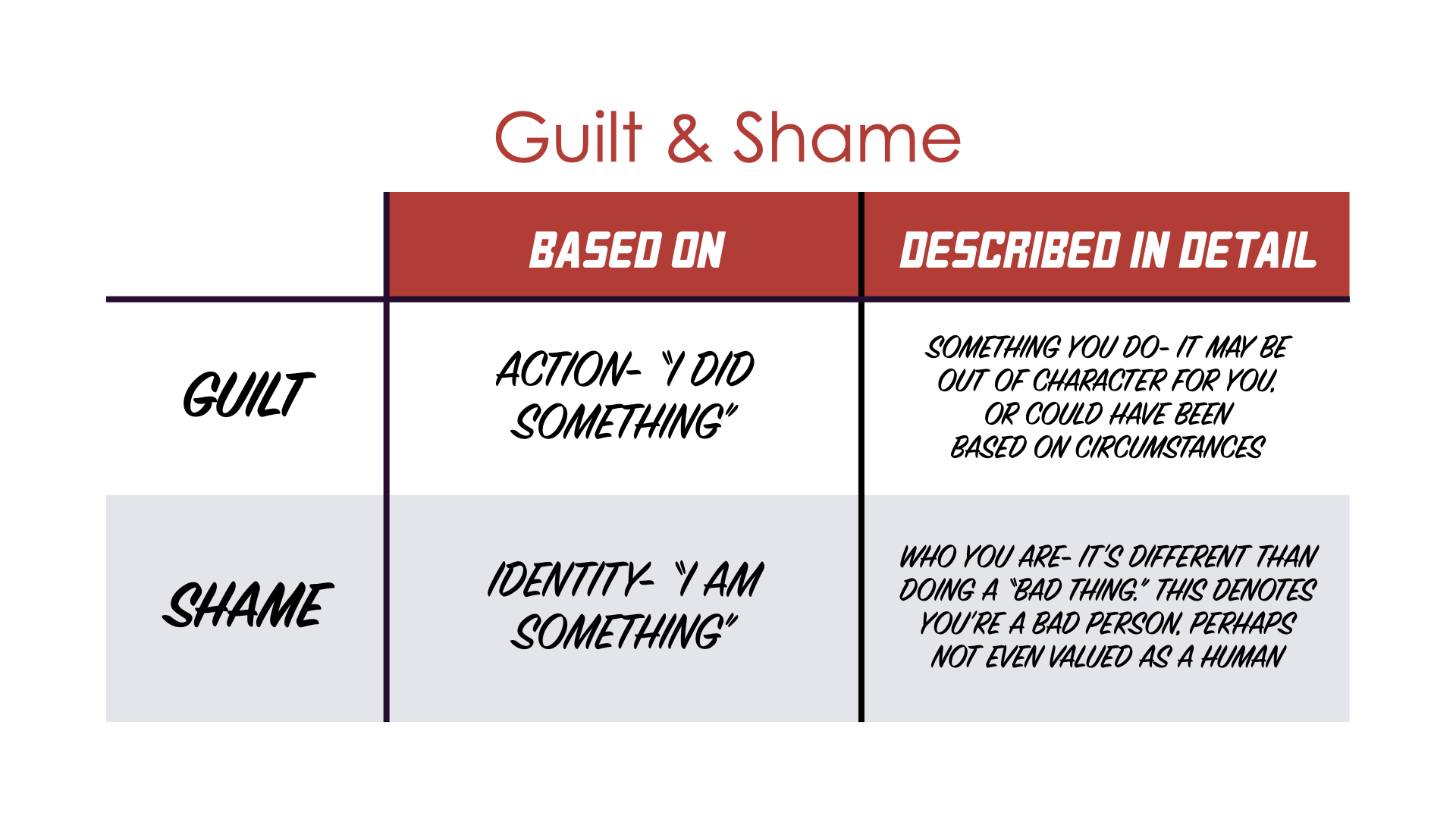
We often use guilt and shame as if they mean the same thing. They do not.
And understanding the difference matters, because one can move us toward repair while the other can leave us stuck in a vague sense that something is fundamentally wrong with us.
In a recent GY6 conversation, Lisa described guilt as a reparative emotion. Guilt is connected to something specific: I did something wrong, I failed to do something I should have done, or I made a decision that hurt someone. There is an action attached to it. There is something you can point to.
That specificity matters because when we can identify the action, we have somewhere to begin.
Guilt Gives Us Something to Repair
Guilt can sound like: “I should not have said that.” “I should have done something differently.” “I hurt someone.” “I failed to act when I should have.”
There is a particular event, decision, action, or failure connected to the feeling. Lisa described guilt as almost surgical in that way. It is specific enough that, when possible, we can go back and address what happened. We can apologize. We can make restitution. We can change a behavior. We can ask forgiveness. We can repair a relationship.
Sometimes the consequences cannot be completely undone. Sometimes the person involved is no longer available. Sometimes circumstances make direct repair impossible. But there is still something identifiable to work with.
You can ask: What happened? What was my responsibility? What can I do differently now? Is there something I can repair?
That is part of what makes guilt potentially productive. It hurts, but it can point somewhere.
Shame Is Much Harder to Locate
Shame sounds very different. Instead of “I did something wrong,” shame says, “Something is wrong with me.”
That shift changes everything.
Lisa gave examples like: “What kind of employee would do that?” “What kind of counselor would do that?” “What kind of mom would say something like that to her child?”
Notice what happened. The focus moved away from a behavior and onto the whole person. It is no longer, “I made a mistake.” It becomes, “I am the kind of person who makes mistakes like this.”
And once the judgment becomes that broad, where do you start?
How do you repair “I’m defective”? How do you make restitution for “I’m a bad person”? How do you correct “There’s something wrong with me”?
That is why shame can become so paralyzing. It is nebulous. It has no clear edge. It can spread into identity, relationships, work, faith, parenting, leadership, and the way we interpret ourselves.
Conviction Versus Condemnation
Lisa connected this distinction to spiritual language. She compared guilt to conviction and shame to condemnation.
That distinction is powerful.
Conviction can be specific: This action was wrong. This needs to change. You need to deal with this. There is direction in it.
Andy pointed out that we use the word conviction in several ways. Someone can be convicted of a particular offense, but we also talk about having a strong conviction about something we believe. In either case, there is something identifiable. You can deal with the action, address the behavior, and move forward.
Condemnation works differently. Condemnation does not simply say, “That was wrong.” It says, “You are wrong.”
And that can leave a person searching for a solution to a problem that has never actually been defined.
You Cannot Repair What You Cannot Name
Lisa used a memorable analogy in the conversation. Trying to escape condemnation can feel like trying to drive from Alabama to China in a car.
You can drive harder. You can drive longer. You can become incredibly disciplined about driving. But the problem is not effort. There is an ocean in the way.
You cannot get there from here using the method you have chosen.
Shame can create the same kind of trap. We work harder. We become more useful. We achieve more. We apologize repeatedly. We serve everyone around us. We punish ourselves internally. We try to become good enough that maybe one day the feeling will disappear.
But if the underlying belief is “Something is fundamentally wrong with me,” achievement cannot solve it. Neither can self-punishment. The problem has moved beyond behavior into identity.
Moral Injury Can Contain Both
This distinction becomes especially important when we talk about moral injury.
Someone may carry legitimate guilt over an action they took—or something they failed to do. That guilt deserves attention. It may require accountability, confession, restitution, forgiveness, behavioral change, or some combination of those things.
But guilt can also evolve into shame.
“I did something I deeply regret” becomes “I am beyond repair.”
“I failed in that moment” becomes “I am a failure.”
“I hurt someone” becomes “I only hurt people.”
That transition is dangerous because it takes a specific wound and turns it into a verdict over the entire person.
And those are two very different problems.
Start With the Question: What Exactly Happened?
If you are carrying guilt or shame, one useful place to begin is with specificity.
Can you identify a particular action? Can you name what you believe you did wrong? Can you identify what you believe you failed to do?
If you can, there may be a pathway toward repair.
What needs to be acknowledged? What needs to be apologized for? What needs to change? What can be restored? And what, if anything, must simply be grieved because it cannot be undone?
But if you keep arriving at answers like: “I’m just a terrible person.” “I’m a bad father.” “I’m a bad leader.” “I’m a bad Christian.” “I’m broken.” “I don’t deserve anything good.”
Then you may no longer be dealing only with guilt. You may be dealing with shame.
And shame needs to be confronted differently.
The Goal Is Not to Escape Responsibility
There is an important distinction here. Separating guilt from shame is not about excusing harmful behavior. It is not about pretending we never did anything wrong.
In fact, healthy guilt can make genuine accountability more possible because we are willing to look directly at what happened instead of collapsing under the weight of a total judgment against ourselves.
We can say: “I did this. It was wrong. I need to repair what I can. I need to learn from it.”
And then, eventually: “That action is part of my story, but it does not have to become my entire identity.”
That is very different from denial. It is also very different from condemnation.
Repair What Can Be Repaired
Guilt can point us toward change. Shame often tells us change is impossible.
That may be one of the most important differences between the two.
If there is something specific to repair, repair it. If there is something to confess, confess it. If there is a behavior to change, change it. If forgiveness needs to be sought, seek it.
But if the message has become “There is no repairing me,” then the issue may no longer be the original action. It may be the condemnation that grew around it.
And that deserves attention too.
Because conviction can lead somewhere. Condemnation simply tells you there is nowhere to go.
You might also want to review:
✅ Short video, "How to heal Moral Injury" = https://www.gy6.online/blog/forgiveness
✅ Short video, "It is PTSD or Moral Injury?" = https://www.gy6.online/blog/which
✅ Short video, "Ten ways Moral Injury happens" = https://www.gy6.online/blog/ten