Is it PTSD or is it Moral Injury?
Moral Injury is commonly confused with Post Traumatic Stress Disorder for a two main reasons:
1️⃣ Most people haven’t heard of Moral Injury, and
2️⃣ Most of the “presenting symptoms” (i.e., withdrawal, anxiety, depression, chemical dependence, etc.), are similar…
So, when the symptoms arise, people automatically assume it’s PTSD.

Here’s the problem with that…
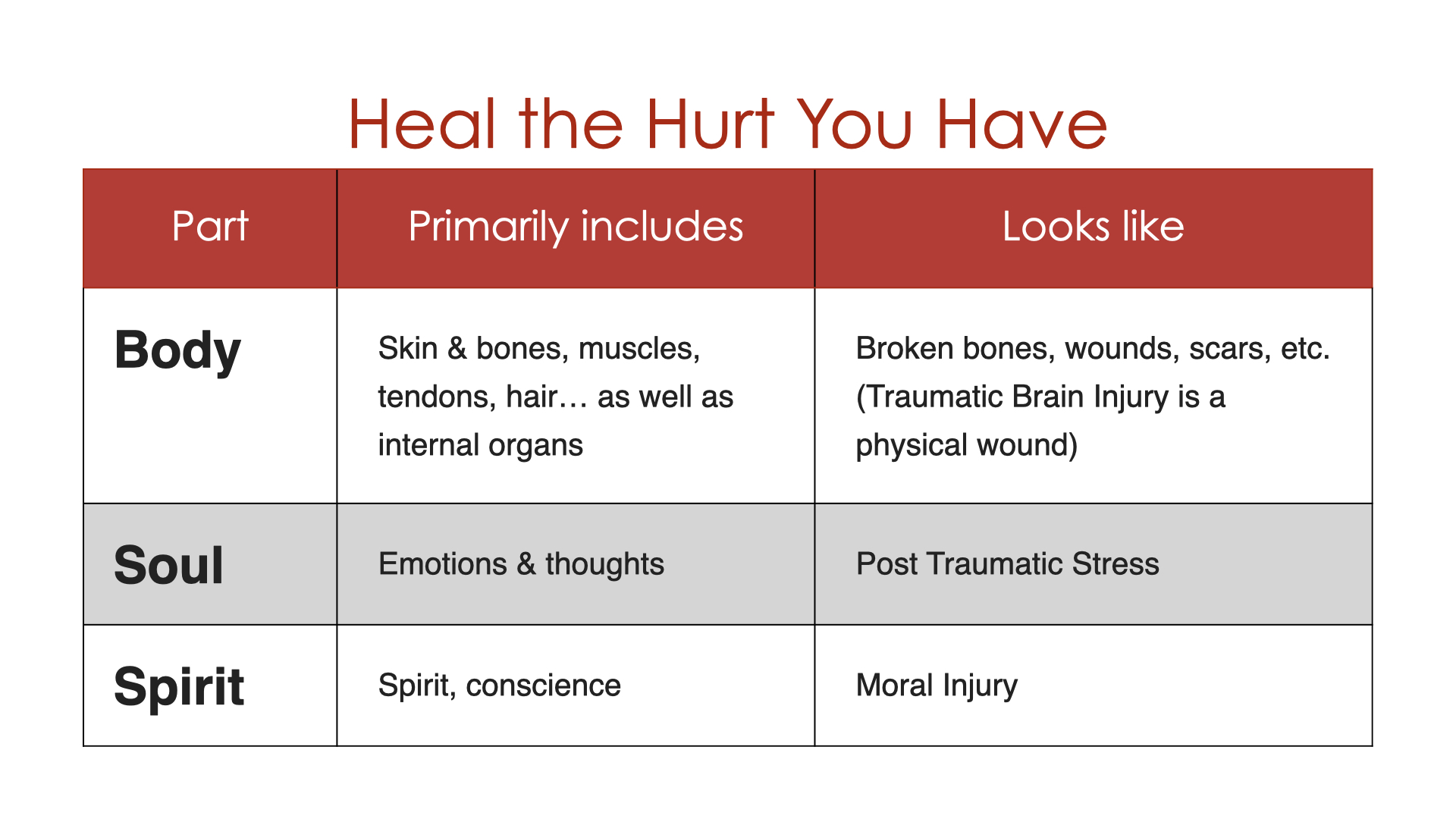
You MUST heal the kind of hurt you have. If you attempt to address something else, it’s as effective as putting a cast on your right arm when you’ve broken the left.
It just doesn’t work.
Soul wounds (PTSD) and spirit wounds (Moral Injury) are different— because the soul and the spirit, though they are interconnected— are different.
(Learn more about the differences in this short video.)
So, where does Moral Injury come from?
Obviously, Moral Injury can be extremely nuanced and unique to each individual— just like Post Traumatic Stress.
(We talk about ten different ways it occurs in this short video.)
There are some common threads, though. In fact, there are generally two:
💩 The cause of Moral Injury is generally the same.
💩 The consequence of Moral Injury is generally the same.
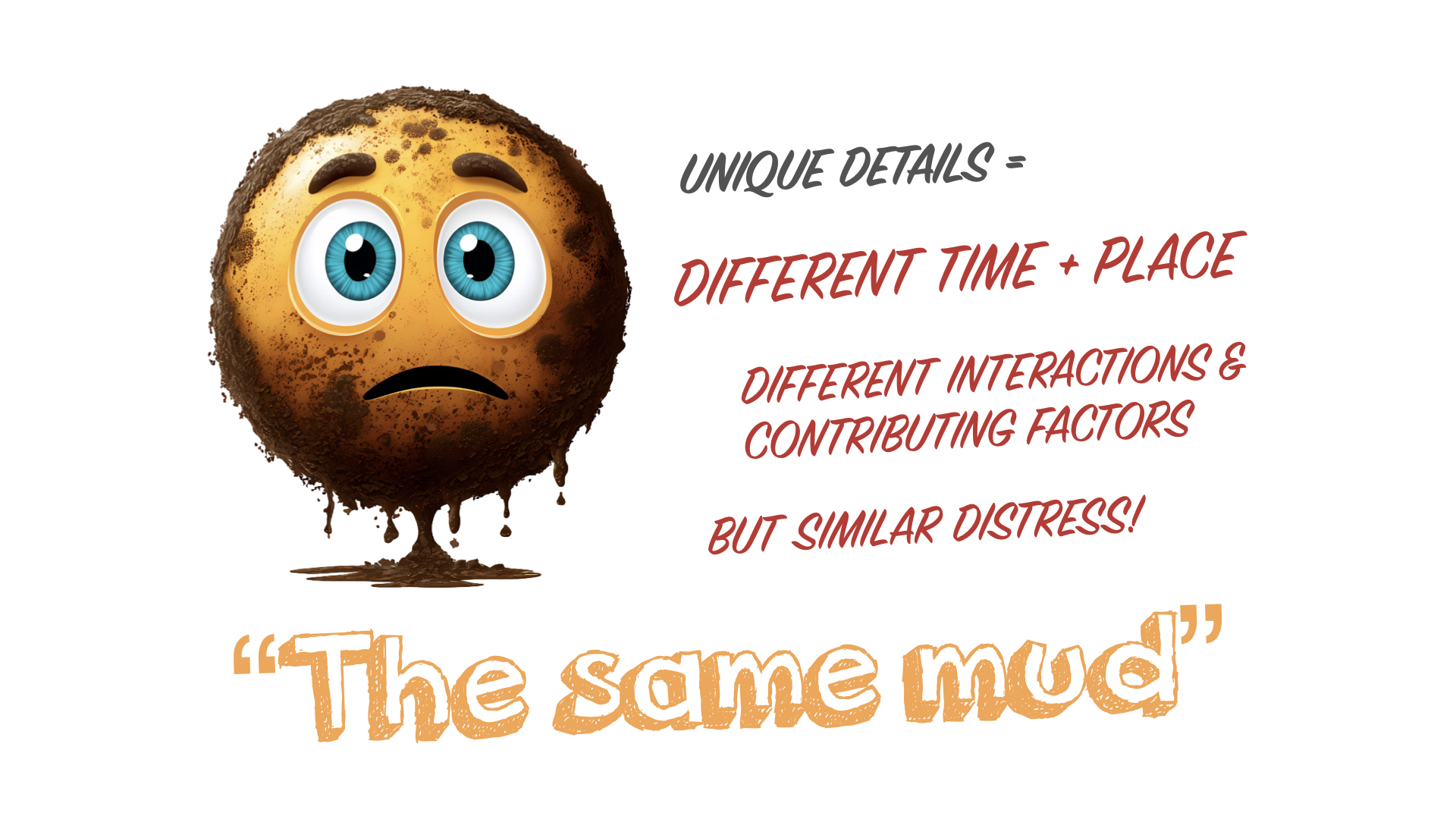
Or, to say it like my friend Russ expressed it (referring to a Clint Eastwood film, Heartbreak Ridge), “We may not have been there at the same time or doing the same thing, but we walked through the same mud and got the same mess on us.”
That’s a good word. Remember, even though the details of your story are different, you’re not alone. You’ve been in “the same mud.”
Common thread #1 of 1 = the cause
The first common thread is that the injury occurs when a person violates their core moral beliefs— their conscience.
Webster’s defines conscience as—
The sense or consciousness of the moral goodness or blameworthiness of one's own conduct, intentions, or character together with a feeling of obligation to do right or be good.
The conscience impacts each of us differently.
In the same way different experiences might create varying degrees of trauma (including none) in terms of PTSD, moral and ethical situations might impact us all in various ways too.
Common thread #2 of 2 = the consequence
The second comment thread is the consequences of Moral Injury— regardless of how this spirit hurt occurs— are similar. The result of Moral Injury is that we judge— and sometimes even condemn— ourselves. In fact, people with Moral Injury don’t need others to judge them.
They’ve already beaten themselves up about the issue(s) of concern.
Different than PTSD
That said, Post Traumatic Stress and Moral Injury-- remember-- are different. Even if they concur.
During dinner one evening— with a veteran from the Iraq War, a State Trooper, and a Park Ranger— we began sharing stories.
(I know. Sounds like the start of a good joke. But it wasn't. Notice...)
The veteran told about being shot at daily when he was in combat. It was stressful, he said, likely understating the experience.
Then he suggested his greatest trauma came from being abused as a young boy. That marked him in “bigger ways,” he shared.
The State Trooper said he had to clear accidents with fatalities— which (due to his jurisdiction) occurred at high speeds and were difficult to sort.
But the most difficult part of his job was delivering the death notices and telling people whom he didn’t know that someone else he didn’t know died in a horrific way that he couldn’t completely provide all the answers for…
The Park Ranger spoke of many unsafe encounters with lawbreakers who were hiding in remote places in the woods.
But what most impacted him was when his training officer was killed while delivering a warrant one day when the ranger wasn’t scheduled for work.
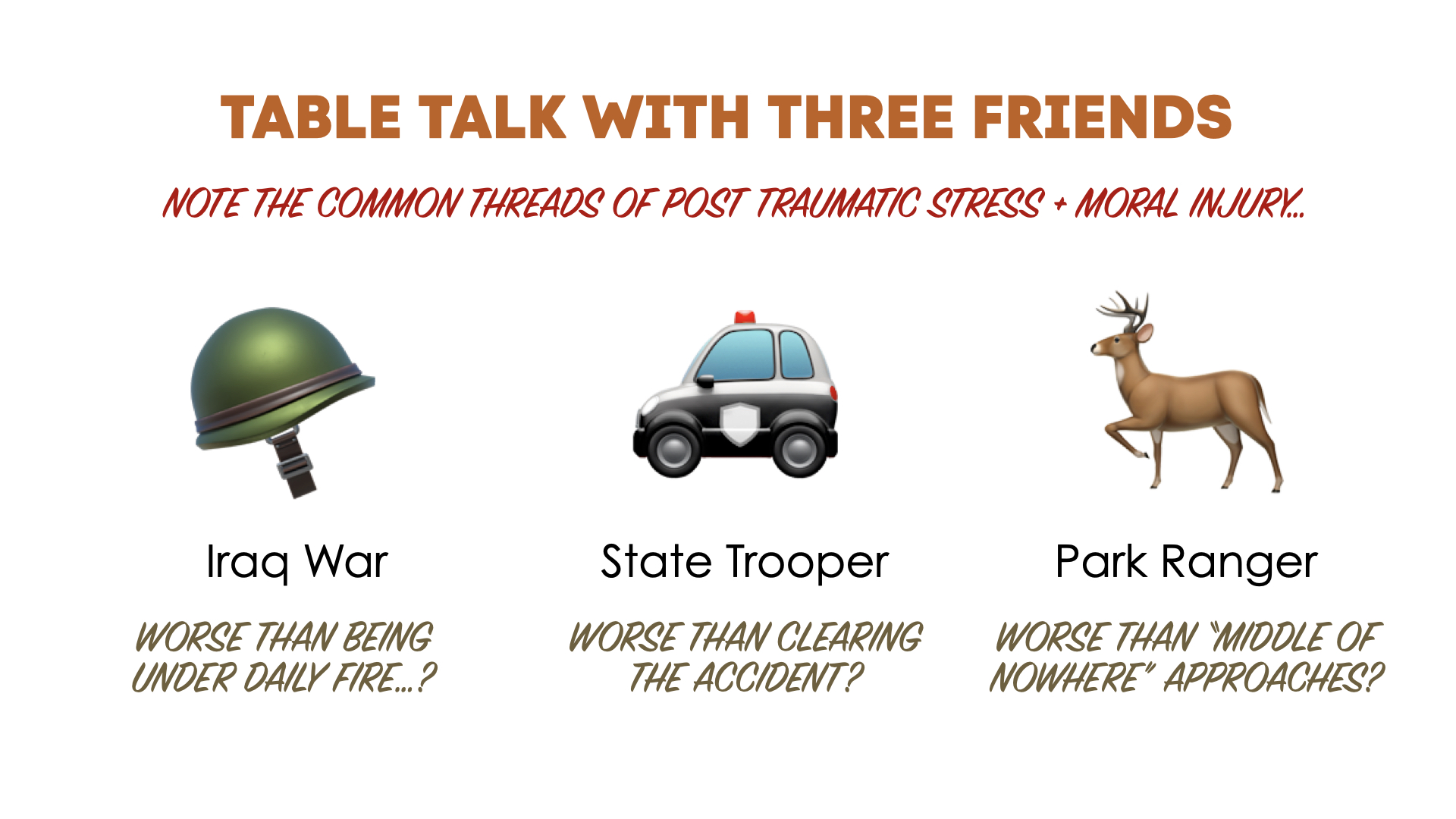
Notice what we just saw...
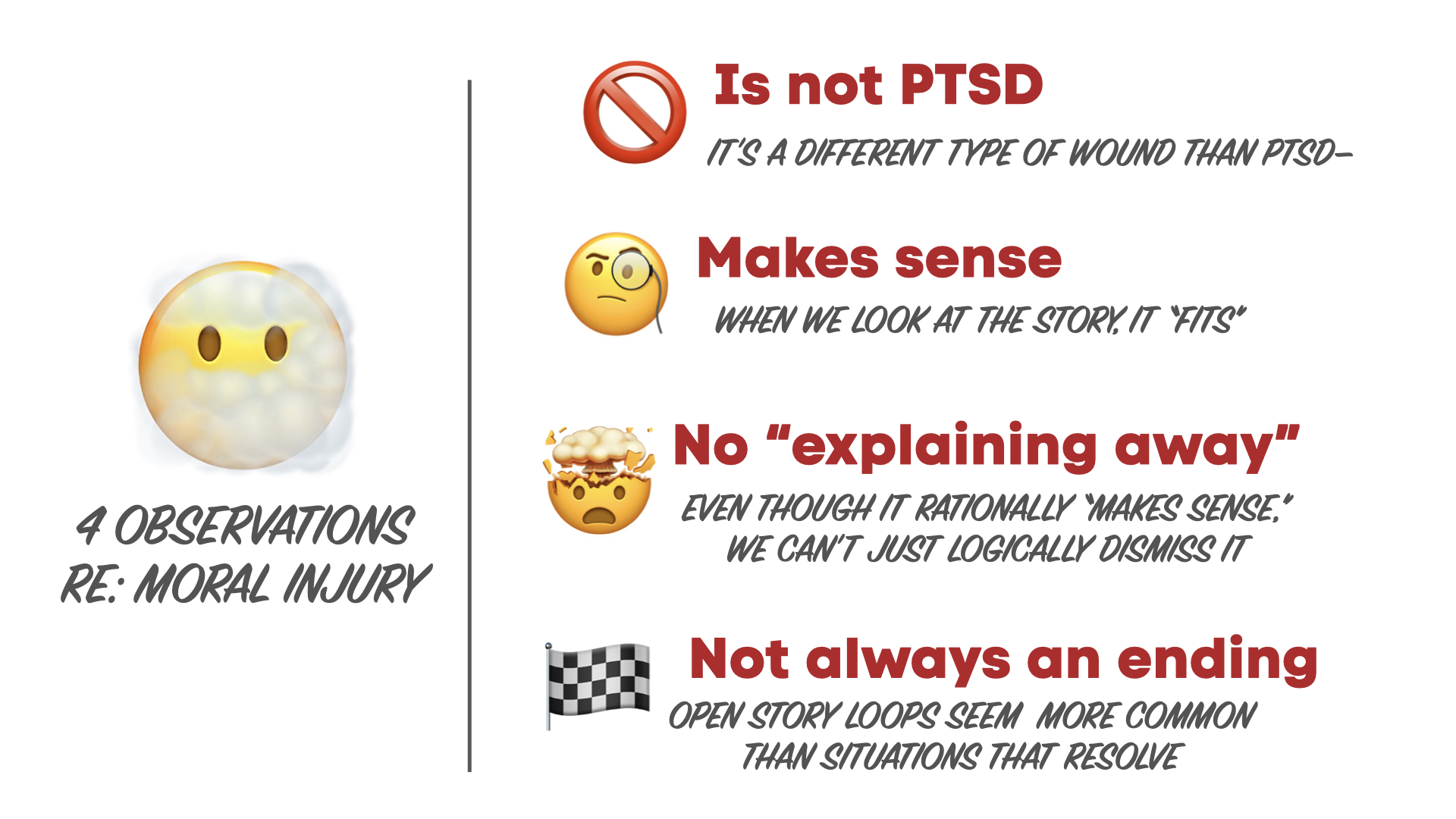
Each of these stories highlight a four truths to remember.
1️⃣ Moral Injury and PTSD aren’t the same (yet can co-exist).
Each story above contains a potential cause of PTSD, as well as a potential cause of Moral Injury (which fits more in our previous list of ten rather than the clear “black and white” commission / omission categories.
2️⃣ Moral Injury makes sense when we hear the story.
Each of the men relayed something personal… and it’s easy to “connect the dots” between the cause and the consequence.
3️⃣ Moral Injury can’t just be “explained away.”
As my friend Beau, a counselor says, “You can’t talk your way out of trauma.” Nor can anyone else talk you out of it, either.
4️⃣ Moral Injury doesn’t always have a “tidy ending.”
Some of the issues which cause Moral Injury leave “open loops” with no resolution. The narrative just lingers… leaving the affected person in limbo.
Conclusion / summary / land the plane
Here’s the core of it: Moral Injury feels different, because Moral Injury starts differently than PTSD.
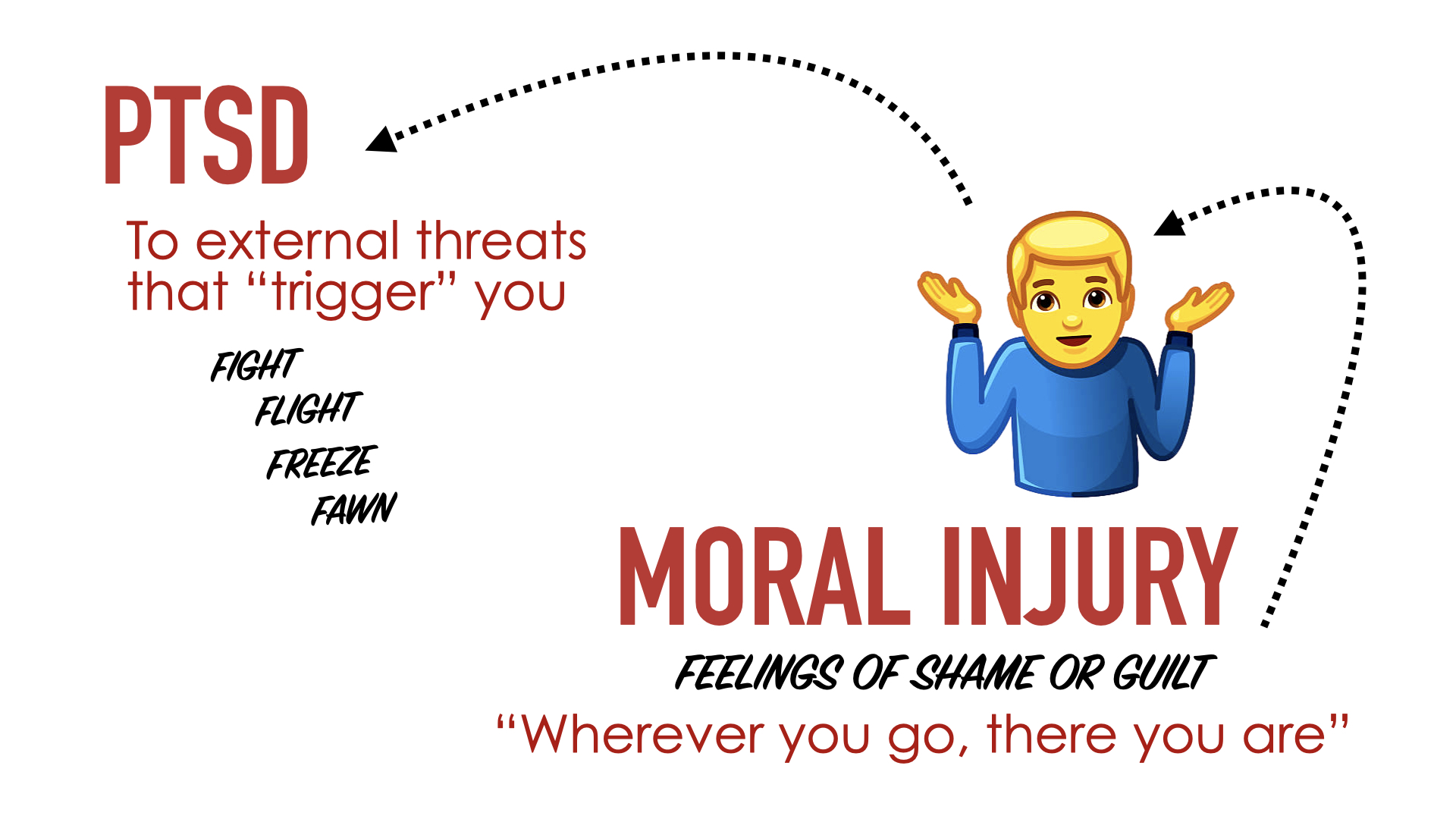
Whereas PTSD is a response to external “triggers” (you can remove yourself from the situation or avoid certain scenarios) Moral Injury goes with you. Moral Injury IS you.
You’ve probably heard the saying "Wherever you go, there you are.” When the issue is “in you” (i.e., your conscience, your spirit), you can’t fight it or run from it.
Notice...
If it's coming from "out there" (something that triggers you), it's probably Post Traumatic Stress. It it comes from "in here" (i.e., a constant drag), it's most likely Moral Injury.
To see a distinction between the two, watch Richard’s story about Post Traumatic Stress in this short video— and then watch this video about Moral Injury.
Next steps
How to heal Moral Injury = https://www.gy6.online/blog/forgiveness
Longer video explaining Moral Injury vs PTSD = https://www.gy6.online/blog/MI