How to heal Moral Injury
Moral Injury occurs when the experiences or choices a person makes, is exposed to, or is ordered to do ruptures from their personal code of conduct, morals, or ethics— the things we’ve been taught as right and wrong. Any hero struggling with this will likely feel great guilt and shame. In the same way “fight or flight” suggests we might have PTSD, guilt and shame suggest we might be dealing with Moral Injury.
(See causes of Moral Injury here.)
Further, as is the case with PTSD, Moral Injury is not exclusive to military personnel or first responders. This spirit-wound can happen in any season of life, from any arena in which we find ourselves.
The solution, the cure— according to professionals who study the injury as well as practitioners who help affected persons “walk it out”— is forgiveness.

It seems like a simple answer, but the data is consistent. Psychologists, counselors, and clinicians who study Moral Injury— from both secular and sacred backgrounds— agree that overcoming Moral Injury requires receiving forgiveness from someone the hero believes has the moral authority to forgive.
Who has such authority?
The answer varies from person to person, meaning it depends on each specific hero. It must be someone whom they feel has the moral authority to grant absolution for their perceived wrongs and failures.
It might be
- Positional authority, such as an officer or even a coach
- Providential representative, such as pastor, a priest, or a rabbi
- Peer— perhaps a battle buddy, a trusted partner, a person from the same unit or squad, or even someone else from the same profession (someone who’s “walked it,” been in “the same mud”)
- Person w/ “spiritual clout,” the moral authority to absolve them

It simply must be someone the injured person believes has the moral position or spiritual clout to impart absolution. And, it’s unique to each person.
At this point the healing process often begins. Sometimes, it even feels like iaomai (for a discussion of iaomai vs therapeuo-- instant healing vs intentional health-- go here).
Now...
You might have been looking for a more revelatory answer— for seven steps, a weekend retreat, a pilgrimage, or something akin to doing something significant rather than receiving something significant.
If you come from a faith tradition, you might have also just winced a bit when reading that coaches, soldiers, officers, teachers, and anyone else can dispense forgiveness.
But consider this…
First, notice how forgiveness and grace are expressed in the New Testament.
One day, a group of friends tore a hole in someone’s roof and lowered a paralyzed man to the feet of Jesus. The size of the crowd initially kept them from entering the home through the front door, so— desperate to get to Him— they created their own entrance.
When Jesus saw their faith, He spoke the words of Mark 2:5—
Your sins are forgiven.
The Pharisees, offended at the statement, believed only God had such authority.
Jesus responded with a simple question (Mark 2:9)—
Which is easier— to say someone’s sins are forgiven or to tell the man to rise and walk?
Presumably, pronouncing forgiveness is easier, because physically healing someone with a statement requires tangible proof. To demonstrate He could do both, He then performed the more difficult task. He healed the man physically, as well.
Fast forward about three years.
Near the end of His time on earth, Jesus did something incredibly interesting. We find it in John 20.
After they discovered the empty tomb, the disciples hid in the Upper Room, fearing they might be killed, too. Jesus appeared to them behind locked doors, showing that our mental and emotional duress (i.e., even fear itself) doesn’t hinder Him from finding us.
John tells us He breathed the Holy Spirit upon them (read: His source of supernatural empowerment).
Then, He declared (John 20:23)—
If you forgive the sins of any, they are forgiven them; if you withhold forgiveness from any, it is withheld.
(By the way, the word sin actually means “ to miss the mark of perfection.” We’ve “churchified” it and almost removed it's real-world application to real-world concerns such as Moral Injury.)
Clearly, Jesus expanded the power of imparting forgiveness farther and wider than the religious elite of the day dreamed possible. Not only could God in Heaven forgive sins, but His Son certainly could (Mark 2:10-11). And not only could that Son forgive sins, but all the King’s sons and daughters could.
Yet when they don't act on the opportunity, the deed goes undone, people remain disconnected, and the healing process falters. People continue to struggle.
In other words, God delegates the expression of forgiveness through His people. They become His agents of grace and mercy to others.
(It’s remarkable that human connection generates such healing that even non-faith practitioners suggested this is the answer.)
What’s the catch?
Well…
Healing happens in the light.
It’s found near the end of your Bible. One of the most well-known verses about moral healing is found in 1 John 1:7-9:
But if we walk in the light as He is in the light, we have fellowship with one another, and the blood of Jesus Christ His Son cleanses us from all sin.
If we say that we have no sin, we deceive ourselves, and the truth is not in us. If we confess our sins, He is faithful and just to forgive us our sins and to cleanse us from all unrighteousness.
(Notice that sin in this verse is neutral. It could be wrongs we commit, goods we omit, things done against us, etc. The verse isn’t about placing blame— it’s about healing the hurt. Cleansing is the emphasis—not confession.)
At first glance, it seems like this verse holds up the need for constant, ongoing confession of each of our perceived moral injuries and ethical indiscretions.
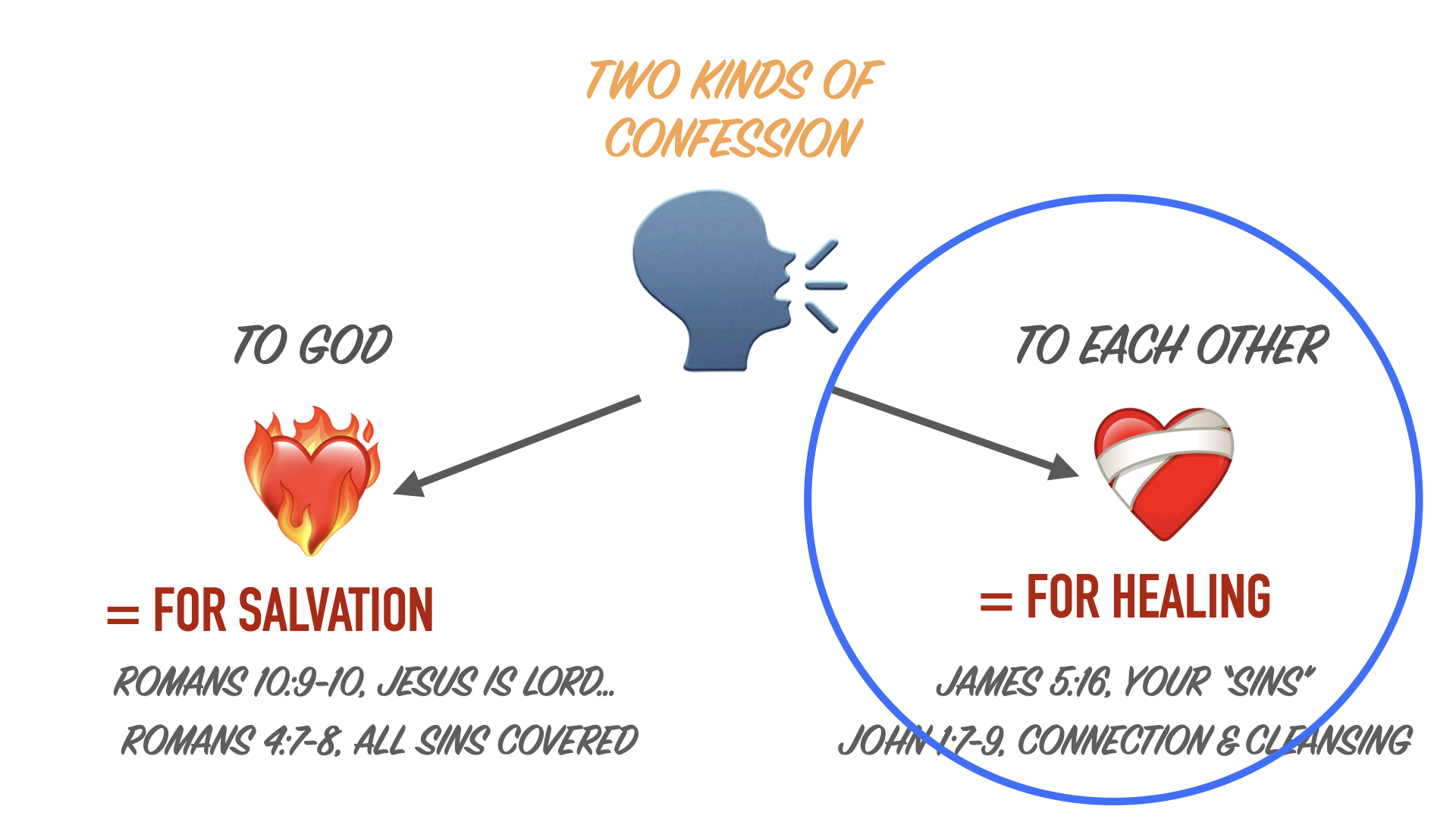
A closer look reveals something more profound, however. You see, confession here is a one-time event done to God, that moment when we first accept radical, unbalanced grace. This is more nuanced in the original Greek language of Scripture than our English translations, because of the verb tense used by John. The way he writes, it’s a one-time-one-and-done action.
Cleansing is an ongoing activity, though, something God constantly does on our behalf— from that moment of confession onward.

John portrays cleansing as a perpetual, repeating action (in the original language). That is, we push the issue into the light once and cleansing occurs indefinitely.
Or, to say it another way, "If we confess once, He continues cleansing and keeps cleansing and keeps cleansing over and over and over and over…”
Now, notice this...
There is a single verse in the New Testament that encourages “ongoing” confession. It’s found in James 5:16. Here, James instructs,
Confess your sins to one another… that you may be healed.
James— Jesus’ little brother— doesn’t tell us to keep confessing to God. He tells us that God has already spoken on the matter— we’re absolved.
Furthermore, the confession isn’t for forgiveness. It’s for healing.
Perhaps one of the greatest roles trusted friends play in our lives is reminding us of the truth— that we remain in high standing with God and with each other.
Here’s another insightful passage. David, the man who lamented after his affair with Bathsheba and his subsequent murder of her husband (to cover it up), later wrote the following declaration (Romans 4:7-8 NIV).
Blessed are those whose transgressions are forgiven, whose sins are covered.
Blessed is the one whose sin the Lord will never count against them.
Notice what David says about our failures.
- Our past is covered. Grace foots the bill. Grace settles it (Romans 4:7).
- Our future failures aren’t counted against us. Grace has already covered anything yet to come (Romans 4:8).

Let’s put all of these verses together…
Whereas David reminds us that forgiveness (Moral Injury) is settled with God, James coaches us to continue confessing to one another. It’s in the context of trusted brothers and sisters— especially heroes who’ve walked the same path— that we hear, through their voice, the words we desperately need…
“It’s OK. You did the best you could. You’re free. You’re loved. You’re accepted.”

Many heroes believe they cannot be forgiven because they have a difficult time forgiving themselves. It was never designed to work that way, though. You were never created to construct the measure of whether or not you merit forgiveness.
We were designed to hear the affirmation— and acceptance— from others. We need them to remind us of what God has already done on our behalf and declared about our standing with Him.
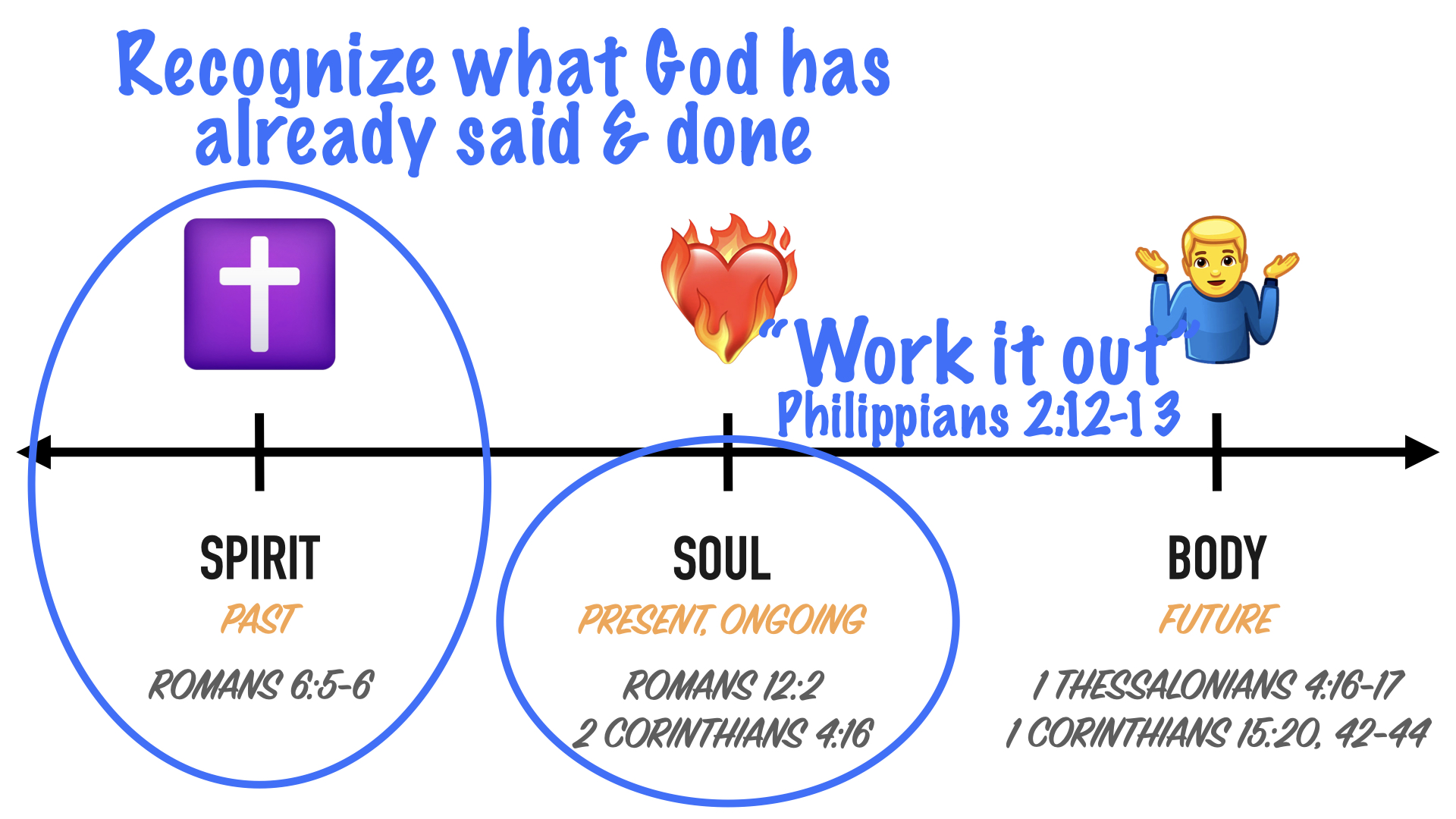
Sometimes, we need them to remind us what God has already said and done (forgiven, forgotten) about our spiritual condition, even as we "work out" emotional issues.