Is PTSD really the cause of suicide?
Many people believe PTSD is the primary driver behind veteran and first-responder suicide. But, maybe— just maybe— it’s not.
Let’s look at the actual data and make a hypothesis.
First, the data…
The VA released a report on veteran suicides in 2012 which references the commonly stated “22 suicides per day.” A decade later, in 2022, they released a follow-up, overviewing the 20-year period of 2001 thru 2020. The average suicide rate among veterans was 16 to 18 per day in the 2001 to 2020 period.
Or, as the 2025 data reports, “The average number of veteran suicides per day fell slightly, to 17.5 in 2023 from 17.6 in 2022.”
In total, over 130,000 veterans and active service members committed suicide from 2001 to 2020.
There’s no way to determine if PTSD is the cause, if Moral Injury is the culprit, or if both contributed. However, we do know that the suicide rate is higher among the veteran community than among nonveterans. Among veterans, it’s even higher among those who are not connected to the VA.
A few points to consider.
First, the rate is declining
The numbers varied from a low of 6,001 in 2001 to a high of 6,796 in 2018. In other words, it seems the number “peaked” at 22 per day in 2012 and has been going down— though it’s still far too high.
A 2025 report notes that “the overall rate of veteran suicides increased over that period. From 2022 to 2023 – the most recent year for which data is available – suicides among veterans dropped from 6,442 to 6,398 suicides.”
Second, this data only accounts for suicides that can be verified as suicides.
This does not include intentional overdoses, running cars off bridges, other “accidental” fatalities, and even “suicide by cop.” The number is likely higher than the reports suggest, even if the verifiable numbers seem to decline.
Third, suicide doesn’t only occur after discharging from service... nor does it occur only during it.
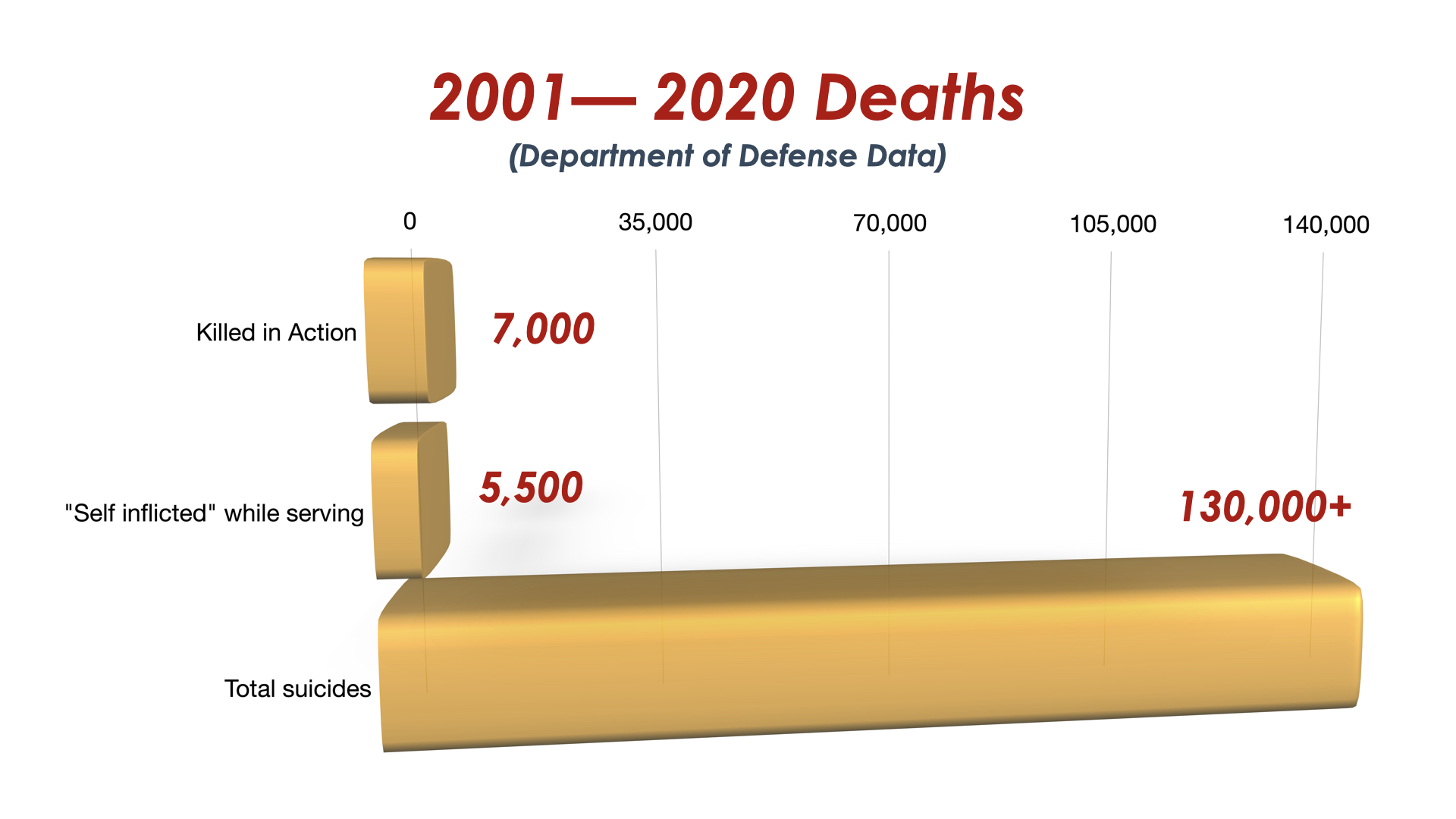
During the 20-year time period from 2001-2020 more than 5,500 in service have died from “self-inflicted injury” (the attribution for suicide used by the Department of War).
These 5,500 died of self-inflicted injuries while serving.
Yes, active members of the military take their lives for various (often unknown) reasons, as well.
Now that you know the suicide statistics, let’s look at KIA (killed in action) numbers for context. According to the Department of War,
More than 7,000 American service members have been killed in the wars in Afghanistan and Iraq alone since 2001 and more than 16,000 have died of other causes (accidents, illness, etc.) in that time.
Or, to say it another way (still referring to the 2001 to 2020 period)—
- 7,000+ were KIA.
- 5,500 died of self-inflicted injuries (meaning a warrior was almost as likely to take his own life while serving as dying from enemy fire).
- 6,000+ died of from suicide each year after discharging.
Here's a visual comparison, so you can catch the gravity of it.
These numbers only account for veterans. First responders do not have a national agency such as the Department of War or the VA which amasses massive amounts of data.
However, my best guess is that the rate among first responders likely reaches similar thresholds.
In fact, the anecdotal data suggests it is…
Second, the hypothesis…
The majority of military suicides occur after the age of 50.
Or, to say it another way, time doesn’t heal all wounds— some get more intense. Let me explain…
PTSD symptoms may lesson over time (you learn to cope with the triggers, you find tools that help you navigate life, and/or you adjust).
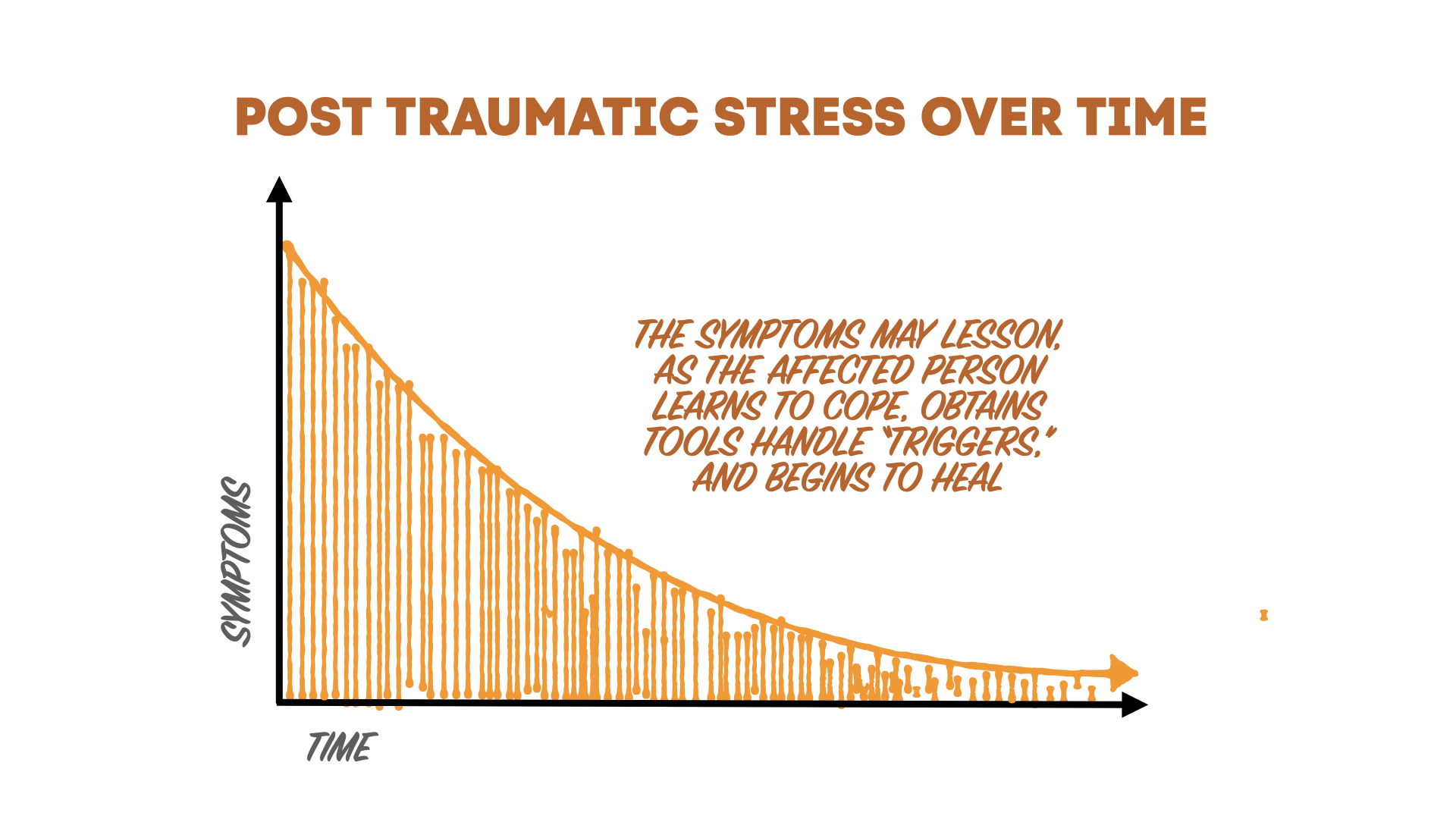
As we discuss in part 2 of the GY6 workshop, you learn to read + recognize + respond to stressors in healthy ways.
(Watch the Recognize + Read + Respond video here.)
At the same time, the guilt & shame of Moral Injury seem to GROW if not addressed.

Moreover, while they are raising their families, the responsibilities they feel for their families actually keeps many who contemplate suicide from acting upon it.

The hypothesis: the death rate goes up and heroes are more likely to succumb to the pressure to take their own life as they get older if they do not learn to address the issues in healthy ways.