When the Weight Builds Over Time
Trauma is not always the result of one dramatic event.
Sometimes it develops gradually.
One difficult experience is followed by another. Stress remains unresolved. Pain from the past overlaps with the demands of the present. Eventually, the weight becomes harder to carry—not because the person is weak, but because the burden has been accumulating for years.
This is accumulated trauma.
Understanding how trauma builds over time can help veterans, first responders, active-duty personnel, ministry leaders, caregivers, and their families make sense of reactions that may otherwise feel confusing or disconnected.

Trauma Does Not Always Begin on the Job
People do not enter military service, law enforcement, emergency response, ministry, or caregiving as blank slates.
Each person arrives with a history.
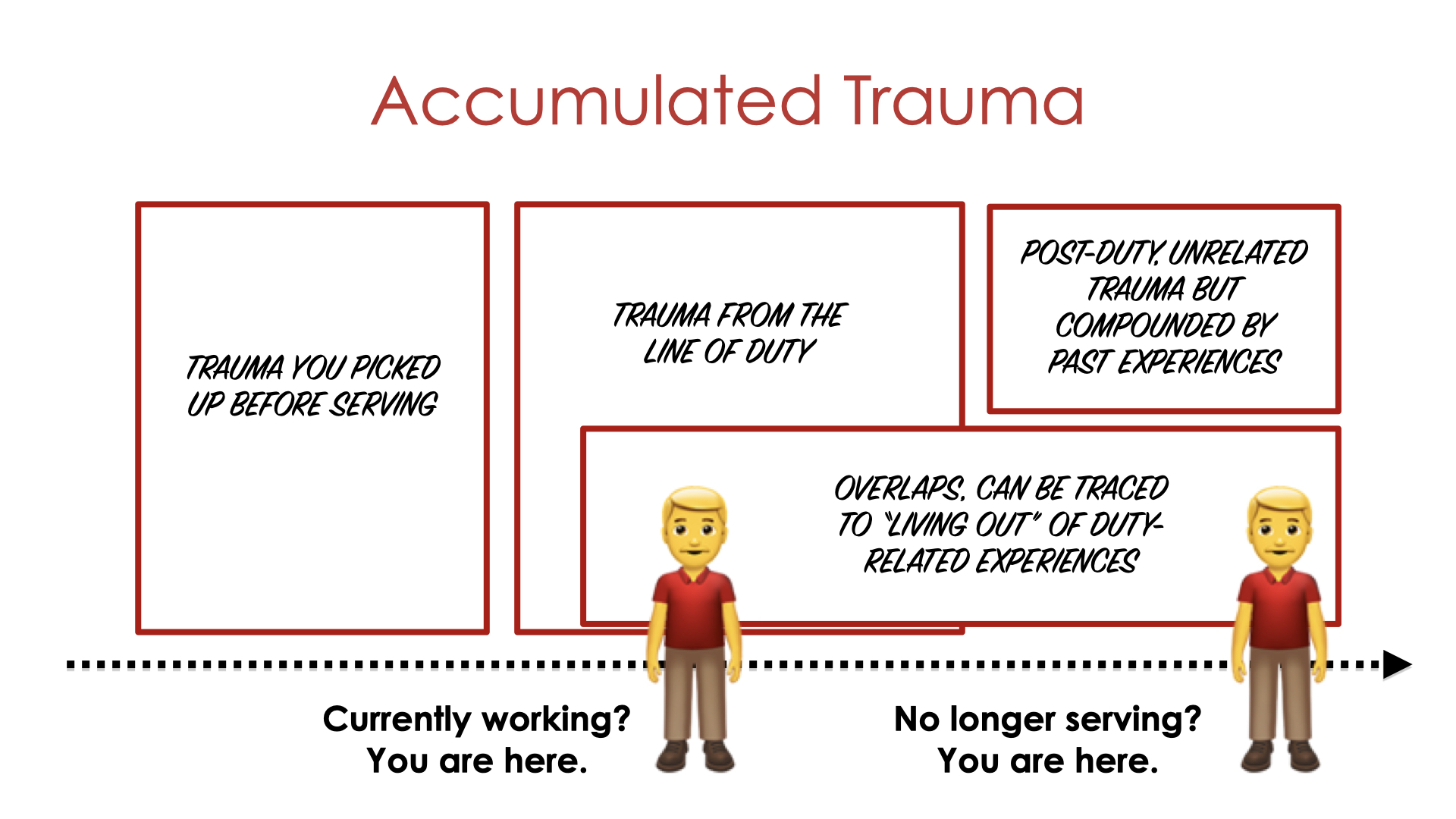
Some may already be carrying difficult childhood experiences, painful relationships, family instability, loss, abuse, neglect, or other unresolved wounds. These experiences may have shaped how they respond to danger, responsibility, authority, relationships, and stress long before they began serving others.
A person may function well for years without recognizing how much of that earlier pain remains unresolved. Then the demands of service begin adding new layers.
The trauma encountered in the line of duty does not replace the person’s previous experiences. It may land on top of them.
Trauma From the Line of Duty
Service-oriented careers can expose people to experiences that most others rarely witness.
A first responder may repeatedly arrive during the worst moments of someone’s life. A veteran may have spent months or years in environments where danger was constant. A police officer may be required to make life-altering decisions in seconds. A chaplain or ministry leader may repeatedly absorb the grief, crisis, and emotional pain of the people they serve.
Any one of these experiences may have an impact. When they happen repeatedly, their effects may begin to overlap.
The person may finish one difficult shift without having time to process what happened before the next emergency begins. They may suppress their emotions because other people are depending on them. They may tell themselves that this is simply part of the job.
For a while, that approach may help them continue functioning.
But functioning is not always the same as healing.
The Experiences Can Overlap
Trauma is not always neatly divided into separate chapters.
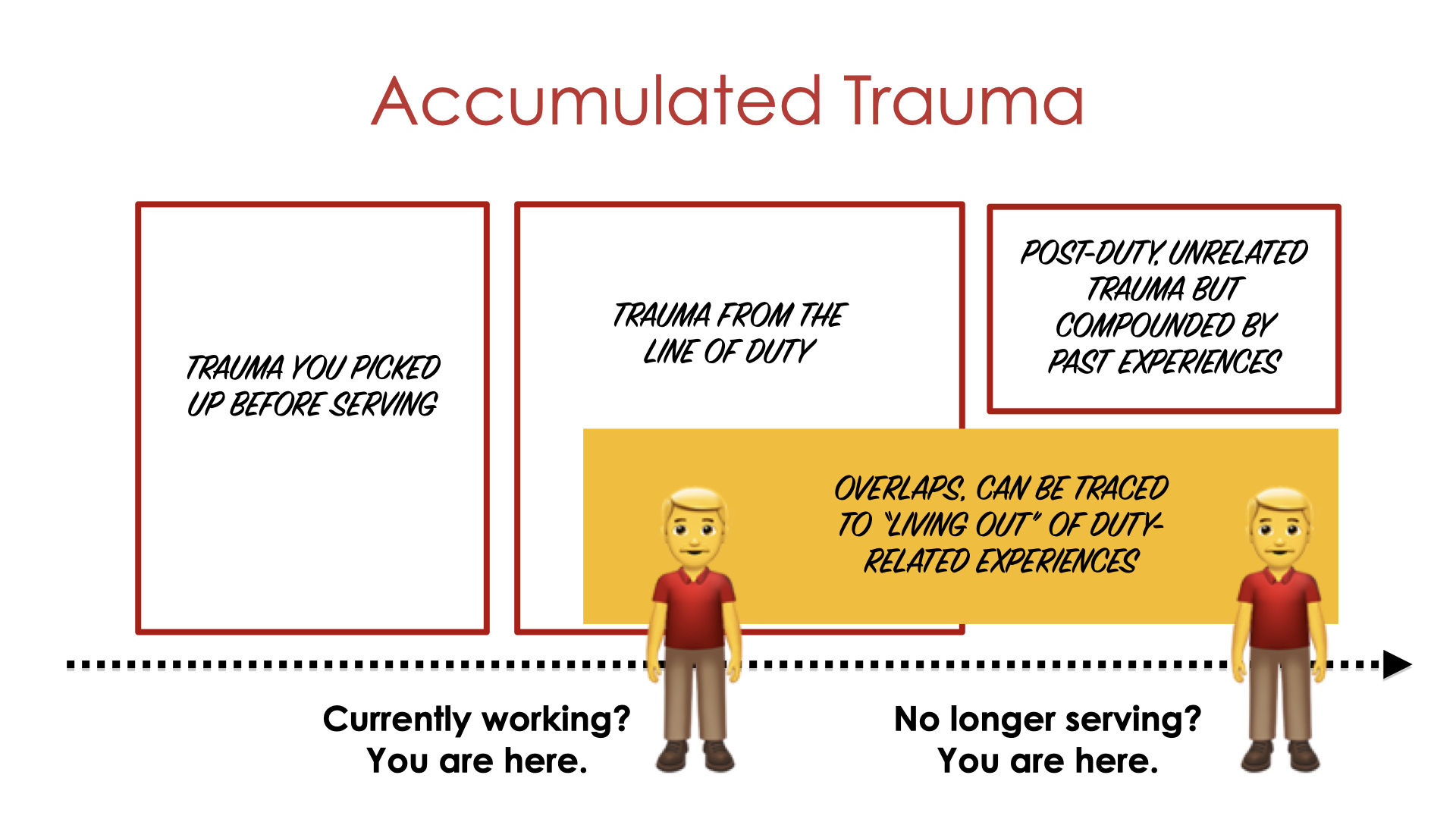
A painful experience from childhood may influence how a person reacts to something that happens during service. An event encountered in the line of duty may intensify unresolved grief from years earlier. Stress experienced after leaving the profession may reactivate memories and survival responses connected to the job.
The person may no longer be serving, yet certain present-day reactions can still be traced to duty-related experiences.
They may become unusually alert in public spaces, feel uncomfortable when sitting with their back to a door, struggle to sleep, avoid crowds, become easily irritated, or disconnect emotionally from the people they love.
These reactions may appear to be caused by what is happening today. In reality, today’s situation may simply be touching a much older wound.
Trauma Can Compound Like Interest
Unaddressed trauma can grow in a way that resembles compounding interest.
One unresolved experience may affect how the next experience is processed. The person may begin carrying grief, fear, anger, guilt, shame, or emotional exhaustion from multiple periods of life at the same time.
The burden becomes larger than any single event.
This does not mean the person is permanently damaged. It does mean that time alone does not always resolve trauma.
People may become skilled at avoiding, suppressing, minimizing, or working around their pain. They may stay busy, isolate themselves, use unhealthy coping mechanisms, or convince themselves that other people had it worse.
Those strategies may help someone survive temporarily, but they often leave the underlying wounds untouched.
Eventually, something relatively small may produce a surprisingly strong reaction. The current event may not explain the intensity of the response because the person is not reacting only to that moment. They may be reacting to years of accumulated experiences.
Understanding Complex PTSD
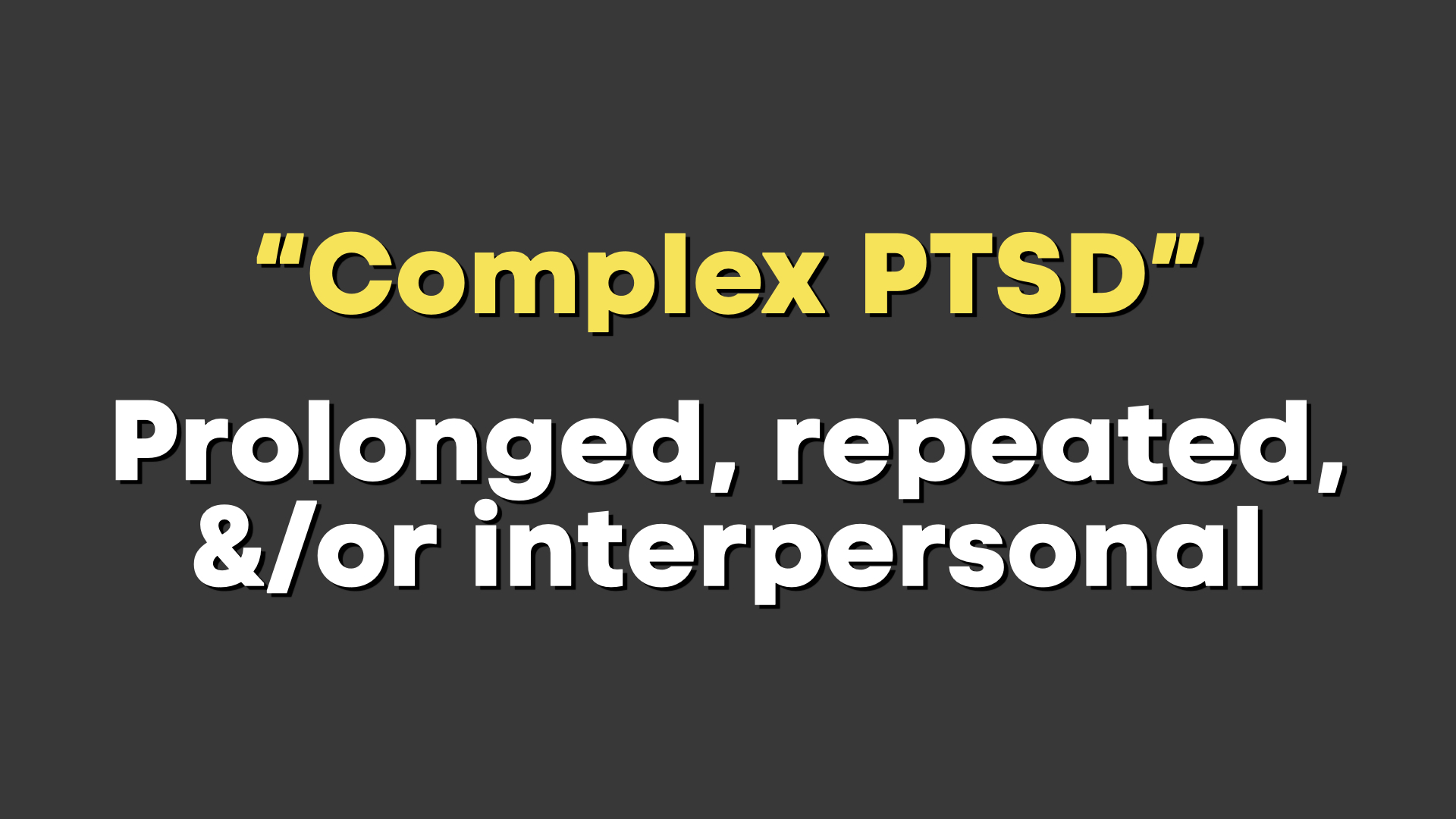
The term complex PTSD is often used when trauma has been prolonged, repeated, or deeply interpersonal.
Rather than developing around one isolated event, the effects may be connected to ongoing exposure, repeated danger, chronic instability, betrayal, captivity, abuse, or relationships in which the person felt trapped or powerless.
Someone living with the effects of complex trauma may experience many of the symptoms commonly associated with post-traumatic stress, including intrusive memories, avoidance, heightened alertness, emotional numbness, and sleep problems.
They may also struggle with:
- Regulating intense emotions
- Persistent shame or a damaged sense of identity
- Difficulty trusting other people
- Unstable or disconnected relationships
- Feelings of helplessness or hopelessness
- A belief that they are permanently broken
These struggles are not evidence of poor character. They may reflect the ways a person’s mind, body, and relationships were shaped by prolonged exposure to pain or danger.
A qualified mental health professional should evaluate and diagnose trauma-related conditions. However, learning about accumulated and complex trauma can help people recognize that their reactions have a context.
The Goal Is Not to Compare Trauma
People often minimize their experiences by comparing them with what someone else endured.
They may say:
- “Others had it worse.”
- “I was only doing my job.”
- “I should be over this by now.”
- “It was a long time ago.”
Trauma is not a competition. An experience does not have to be the worst imaginable event to leave a wound.
What matters is how the experience affected the person, what resources they had at the time, whether they felt supported, and whether they had an opportunity to process what happened.
Two people can experience the same event and respond very differently. Neither response automatically makes one person stronger or weaker than the other.
Healing Begins by Looking at the Whole Story
Accumulated trauma requires us to consider the whole person—not just the most recent event.
Furthermore, accumulated trauma is often a series of smaller, repeated issues. Rather than a knockout punch, it feels more like constantly stepping in poo...
Healing may involve examining experiences from before service, during the line of duty, and after the person’s role or career changed. It may also require attention to physical health, emotional patterns, relationships, spiritual questions, grief, guilt, and moral injury.
The goal is not to live permanently in the past. It is to understand how the past may still be shaping the present.
When people can identify what they are carrying, they can begin responding with greater wisdom and compassion. They can seek professional care, reconnect with safe people, develop healthier coping strategies, and address wounds that may have remained hidden for years.
Accumulated trauma does not accumulate overnight, and healing may not happen overnight either.
But healing can begin.
The weight may have built over time, but with the right support, it does not have to be carried alone.